On December 11, 2025, Clair Obscur: Expedition 33 swept The Game Awards with a record nine wins. Game of the Year. Best Independent Game. Best Debut Indie Game. The same studio, in the same night, treated as both industry pinnacle and scrappy newcomer.
Sandfall Interactive. 30 employees, Kepler Interactive backing, outsourced animation to Korean studios, professional QA through QLOC, voice cast including Andy Serkis, Charlie Cox, and Ben Starr. Budget reportedly under $10 million, but professionally funded from day one.
That same year, Schedule 1 sold over 8 million copies and made roughly $125 million. Made by one guy in Sydney named Tyler. No publisher. No marketing budget. It blew up because streamers found it and TikTok spread it.
Both games are called “indie.” Same label. Same Steam tag. Same category on every storefront. One had professional backing from day one. The other needed to catch lightning in a bottle just to be seen.
That’s the problem.
The Scale Problem
This is what “indie” covers in 2025.
- TVGS. One guy in Sydney. Self-funded, self-published.
- Iron Gate. Five people in Sweden. Self-published. Blew up massively, but they were genuinely scrappy at launch.
- Supergiant Games. ~20 people in San Francisco. Self-funded, no publisher, built their audience over four games.
- Sandfall Interactive. 30 people in France. Publisher backing, outsourced production, A-list voice cast.
- Frost Giant Studios. Industry veterans. $35 million in venture capital.
- Larian Studios. 400+ employees. Budget north of $100 million.
The term now just means “not a subsidiary of a major publisher.” Most shipped games use contractors for QA and localization. That's not what separates these tiers. The difference is infrastructure, funding source, and who carries the risk from day one.
When a $10 million production wins Best Indie, it's not just a category error. It's a solo developer in the same algorithmic pool, competing for the same visibility, against a studio that started with everything they're still trying to build.
What Indie Used to Mean
Before Steam. Before Xbox Live Arcade. Getting your game on a platform was a massive undertaking. You couldn't just release on PlayStation 2. You needed manufacturing connections, distribution deals, retail relationships, platform approval. The barrier wasn't talent or even money. It was access. The infrastructure to get a game in front of players simply wasn't available to small teams.
Indie games existed, but they lived in the margins. Flash games on Newgrounds, Miniclip, and Addicting Games. Mods distributed through forums. Shareware passed around on discs. The audience was there, but the path to reaching them at scale wasn't.
Then open platforms changed everything. Xbox Live Arcade launched in 2004. Steam opened to third-party developers in 2005. Suddenly, a small team could ship a game to millions of players without navigating the gatekeepers. The barrier dropped from "who you know" to "what you can build." This is where the modern indie movement started. Not as a genre or an aesthetic, but as an economic reality. Small teams could now compete for the same audience as major publishers. The playing field wasn't level, but at least you could get on it.
Who Carried the Risk
The developers who defined what "indie" meant carried the full weight themselves.
The precursors. No clear path to making a living unless you got acquired or built your own platform.
- Robin Walker, John Cook, Minh Le, and Jess Cliffe. Team Fortress (1996) and Counter-Strike (1999) started as hobbyist mods that Valve recognized and absorbed. The creators got jobs out of it, but that path only existed because Valve was actively scouting the modding scene. For everyone else, there was no template.
- Andrew and Paul Gower built RuneScape out of their parents' house in Nottingham and launched it in 2001. Browser-based, self-published, no outside funding. They built their own platform because none existed for them.
- Daisuke Amaya spent five years making Cave Story alone and released it as freeware in 2004. The game proved an audience existed for this kind of work, but not how to make a living from it.
- Tom Fulp and Dan Paladin built their audience through Flash games on Newgrounds, surviving on ad revenue and passion projects before shipping Castle Crashers on XBLA in 2008.
The first generation. When the gates opened, the weight became financial.
- Jonathan Blow put $200,000 of his own savings into Braid. No publisher, no safety net. He bet his financial future on a puzzle platformer about time manipulation and regret.
- Edmund McMillen and Tommy Refenes nearly went broke making Super Meat Boy. They talked publicly about not knowing if they could pay rent, working through the stress of watching their savings evaporate.
- Markus Persson built Minecraft alone in his apartment, selling alpha access to fund continued development. It sold millions before Microsoft bought the company for $2.5 billion.
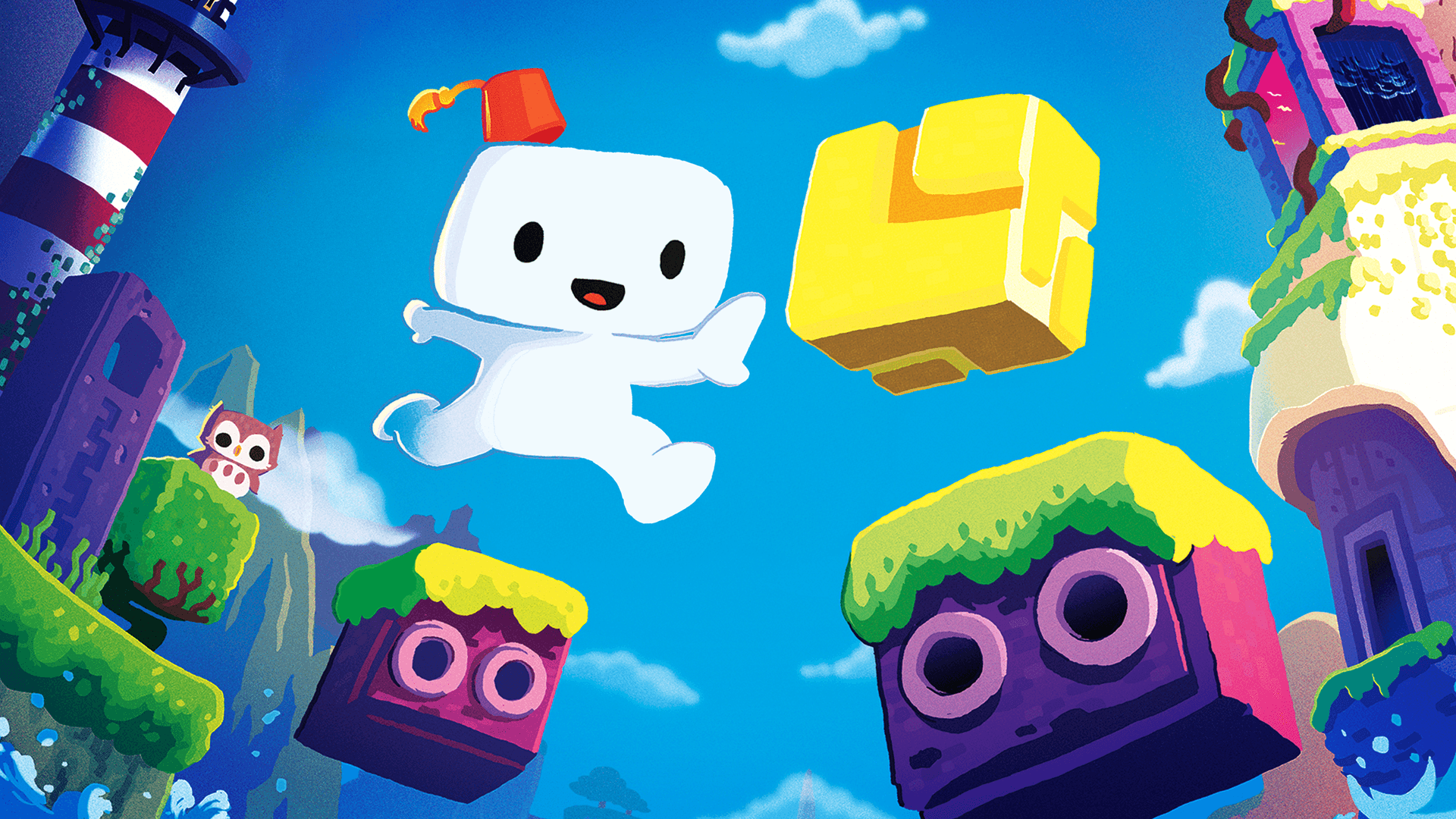
- Phil Fish spent five years on Fez with no publisher backing and no guarantee it would ever ship. The documentary Indie Game: The Movie captured him on the verge of breakdown, unsure if the project would destroy him.
- Kyle Gabler and Ron Carmel quit their jobs at EA, spent two years and $10,000 of their own savings making World of Goo out of coffee shops. They turned down a $650,000 publishing deal to stay independent.
- Derek Yu released Spelunky as freeware in 2008, building it alone in GameMaker. He spent another four years rebuilding it for the commercial XBLA release, funding the development time himself.
This was what "indie" meant. Not a vibe. Not an aesthetic. Carrying the full weight yourself. The funding, the development, the risk. No infrastructure to fall back on, no safety net if it failed. The term earned its cultural weight because these developers earned it.
How the Definition Drifted
Success changes things.
- Team Cherry released Hollow Knight in 2017 as a three-person team from Adelaide. Crowdfunded on Kickstarter. Genuine grassroots success. By 2025, Hollow Knight: Silksong was one of the most anticipated games in the industry, selling millions in its first months. Still a small team. Still independently owned. But "hoping a streamer notices our game" is no longer their situation.
- Supergiant Games started with seven people making Bastion. By Hades, they were an established studio with a track record, critical acclaim, and a guaranteed audience. Independently owned, but operating from a position of strength rather than survival.
- Larian Studios is the final boss of this argument. Started in 1996 with nothing. Nearly went bankrupt multiple times. Swen Vincke mortgaged his house to keep the company alive. They spent two decades clawing their way up, game by game, almost dying after every release. By Baldur's Gate 3, they had over 400 employees across multiple offices. Won Best Independent Game at TGA 2023. They proved ownership independence can produce the best game in the world. They earned every bit of their success the hard way. But calling them "indie" in the same breath as a solo developer working weekends is absurd.
These aren't bad actors. Team Cherry didn't do anything wrong by making a successful game. Larian earned their success. The problem isn't the studios. The problem is that the term "indie" now has to cover all of them, plus solo developers hoping to make rent. The only thing separating Larian from Blizzard is a signature on a sale agreement. If Blizzard had never sold to Activision, we'd be calling them indie today. That alone proves the definition is broken.
This shift didn't happen randomly. AAA budgets exploded, a gap opened between those productions and smaller teams. Studios like Sandfall and Larian filled that space. They weren't subsidiaries, so "indie" became the default label. The gatekeepers changed too. In 2005, the barrier was physical. Disc manufacturing, retail shelf space. Now it's algorithmic. Steam discovery, social media reach, streamer attention. Thirty-five million in VC money buys access to those systems. A solo developer is hoping they notice him. Players reinforced it because they care about how a game feels, not who funded it. And studios embraced it because "indie" carries marketing value. Passion project. Critical darling. Underdog story. Nobody wants to be called "mid-tier" or "AA." None of this is a conspiracy. Just language shifting under market pressure.
The Publisher Question
Then there are the "indie publishers." Devolver Digital. Raw Fury. TinyBuild. Team17. These companies focus on smaller games, but they're still publishers. When you sign with one of them, they handle marketing, provide funding, manage PR, and take care of distribution. The hardest parts of being independent get outsourced.
Publisher backing doesn't eliminate risk. It fundamentally changes who carries it. And that's assuming a fair deal. The reality is that many of these publishers prey on inexperienced solo developers, offering poor terms that take advantage of desperation and inexperience. Some of them position themselves as saviors while extracting value the developer will never see. That's a separate conversation, but it's worth noting that "indie publisher" isn't automatically a lifeline.
This doesn't make those games bad. Many are excellent. But there's a meaningful difference between "solo dev hoping a streamer notices their game" and "small studio with professional publishing infrastructure handling the business side." The financial risk profile and path to visibility are completely different. If indie originally meant carrying the full weight yourself, then signing with a publisher, even an indie-focused one, changes your situation fundamentally. You're still making the game. But you're not navigating the market alone.
Blue Prince, one of the best-reviewed games of 2025, was published by Raw Fury. Schedule 1 had no publisher at all. Both get called "indie." But the developer of Schedule 1 had to figure out visibility, marketing, and distribution entirely on his own. The Blue Prince developer had professional support. Neither is wrong. But they're different situations that the current definition doesn't distinguish.
Different Weight Classes
Here's what the category looks like now.
- Solo developers and micro-teams. Schedule 1. R.E.P.O. Billy Basso making Animal Well alone for seven years. Toby Fox making Undertale off a $51,124 Kickstarter. Luca Galante building Vampire Survivors as a one-man operation. The direct descendants of the original indie movement. Taking personal financial risk, building without infrastructure, hoping the work finds an audience. For every Schedule 1 that catches fire, there are thousands that never get seen.
- Small studios with publisher backing. Professional marketing, funded development, distribution handled. Still small teams, but operating with infrastructure the pioneers didn't have. Assuming the deal is fair.
- Established independent studios. Team Cherry. Supergiant. Were genuinely indie once, succeeded, and now operate from positions of strength. Still independently owned, but "scrappy underdog" no longer applies.
- Large independent companies. Larian with 400+ employees. Dreamhaven, Mike Morhaime's publishing label staffed by Blizzard veterans working on Wildgate. Frost Giant Studios, ex-Blizzard devs who raised $35 million to make Stormgate. Second Dinner, ex-Hearthstone leads who raised $100 million after Marvel Snap. These studios are "independent" but they have venture capital, industry connections, and experienced teams. Completely different situation from someone coding alone in their apartment.
What this means is that these are different weight classes. A high school athlete competing against professionals. But they all get called "indie." The same word covers a solo developer in Sydney hoping a streamer notices his game and a 30-person studio with Kepler backing. That's not a definition. That's a technicality.
It's hard to be a "scrappy underdog" when the underdogs you're compared against having Andy Serkis in the recording booth.
The Counterargument
The strongest defense of the current system goes like this. "Indie" has always meant ownership independence, not scale. Awards celebrate creative outcomes, not production hardship. Players don't care whether a developer suffered. They care whether the game is good. Sandfall owns their IP, they're not a subsidiary, and they made a critically acclaimed game. That logic holds.
But the issue isn't that "indie" is vague. It's that institutional systems still treat it as a single competitive category. Steam's "Indie" tag puts Larian next to solo devs. The Game Awards puts Sandfall in the same pool as Dogubomb. Games media covers them with the same framing.
If the industry explicitly said "indie means ownership, not resources," that would at least be honest. Instead, the term borrows cultural weight from developers who took real economic risk while applying it to studios that never faced that risk. That's not hypocrisy from any individual studio. It's a structural problem the industry hasn't chosen to fix.
What Actually Separates Them
Budget doesn't work as a dividing line. Warhorse Studios made Kingdom Come Deliverance 2 to a quality standard comparable to any AAA release. $40 million. If that same game were developed in San Francisco or Los Angeles, it would have cost two or three times as much. GSC Game World built S.T.A.L.K.E.R. 2 in Ukraine, where developer salaries are a fraction of US rates. Raw dollar amounts don't translate across global economies. A $10 million game made in France with Korean outsourcing has nothing in common with a game made by five people in Sydney on savings and credit cards.
Scale doesn't work either. Warhorse has around 250 employees but still feels different from Ubisoft. Larian has 400+ but claims the indie label. Team size alone doesn't capture the distinction people are actually pointing at.
What separates them is infrastructure access.
Major outsourcing studios. Orchestras. Professional production houses. Big QA teams. Localization pipelines. Publishing deals that open doors to marketing channels, platform relationships, and visibility. This is the infrastructure that used to be reserved for AAA development. Now studios like Sandfall and Larian tap into it while calling themselves indie.
A solo dev isn't contracting QLOC for QA. They're not booking orchestra sessions. They're scouting individual artists on social media, maybe working with a two-person outsourcing operation, handling their own marketing through Discord and Twitter. The infrastructure available to them is fundamentally different.
The question isn't whether you're independently owned. It's whether you built your infrastructure or started with it.
Team Cherry built theirs. Three people in Adelaide. Crowdfunded. Figuring it out as they went. By Silksong, they had resources. Orchestras. Contractors. A guaranteed audience. But they earned that position through Hollow Knight's success. The infrastructure came after. Sandfall started with it. Kepler backing. Korean animation studios. QLOC. Hollywood voice cast. Professional infrastructure from day one. That's not a criticism of their game. It's a different situation.
"Indie" used to describe developers who lacked access to professional infrastructure and had to build everything themselves. That's the cultural weight the term carries. When studios that started with infrastructure use the same label, they're borrowing weight they didn't earn.
The Triple-I Band-Aid
"Triple-I." That's the industry's answer. High-production independent titles. Games like Expedition 33 and Baldur's Gate 3. Meant to separate them from solo devs and micro-teams. If "indie" still communicated scale or resources, you wouldn't need a modifier. Triple-I is a linguistic band-aid. It allows studios to keep the valuable 'indie' credibility while signaling to investors that they are safe bets. But it changes nothing where it matters.
On Steam, on PlayStation, on every storefront, these games are still categorized as indie. Same tag. Same category. Triple-I is industry jargon, but the platforms haven't adopted it. A solo dev in Sydney is still sitting in the same bucket as Larian. It's not malice. It's the same market pressure that drifted the definition in the first place.
But a term the industry uses while the platforms ignore doesn't fix the foundational problem. It just gives people a word to use in interviews.
Bottom Line
The "Indie" tag on Steam is a folder where the industry puts everything that doesn't have a Ubisoft logo on it. It's a junk drawer. One term covers a solo developer in Sydney hoping a streamer notices his game and a 400-person studio in Belgium with $100 million in backing. Same label. Same category. Completely different realities. I've laid out a framework. Infrastructure access. Who carries the risk. Whether you built it or started with it. By that definition, there's a clear line between someone like Tyler and someone like Sandfall. But here's the thing.
It doesn't matter.
Definitions aren't decided by frameworks. They're decided by usage. If enough people call something "indie," that's what it becomes. And right now, gamers don't define indie by infrastructure or risk or economic reality. They define it by feel. By aesthetic. By what it isn't.
Expedition 33 feels indie because it isn't a live service game. It isn't designed to extract maximum revenue from every player interaction. It isn't Ubisoft. It isn't EA. It doesn't feel like the bloated, monetized, focus-grouped products that AAA has come to represent. Neither does Hades 2. Neither does Baldur's Gate 3. They feel like passion projects, so they get the label.
This is what happened to indie music. It started as a production reality. Small labels. Self-funded. No major backing. Then it became a sound. Then a vibe. Now it's a genre tag on Spotify. The economic meaning got absorbed into aesthetic meaning. The same thing is happening to games. I hate it. But that's consumerism. That's how language works under market pressure. The original definition gets diluted until the word just means whatever the mainstream decides it means. The developers who built the brand, who carried the actual risk, who earned the cultural weight the term carries, their contribution gets flattened into a marketing category.
The only way to change that is to reject it. To refuse the label. To build something that doesn't fit the current definition and force people to find a new word for it. That takes time. It takes people willing to go against the grain. Not just against AAA. Against the new status quo that indie has become.
Why I'm Walking Away
I'm writing this as someone working out of his home. Scraping by with whatever money I can put toward a project I'm passionate about. Building a game I want to play, hoping there's an audience for it. No publisher. No infrastructure. No safety net. Not for lack of trying. Even the indie publishers are dominated by market trends, and when you're building something that doesn't fit neatly into what they're selling, you're at a disadvantage before anyone even looks at your game.
By any historical definition, that's indie. But the term has gotten so diluted over the last two decades that even if I achieve some success, I don't know if I want to be considered part of this category anymore. The original pioneers were challenging the status quo. That's what it meant to be indie. But when indie is the status quo, it feels disingenuous to call it such. I feel closer to someone like Tom Fulp than I do to the developers at Sandfall. That much is clear. I'm not saying they did anything wrong. They made a good game, but we're not in the same situation. Maybe the term served its purpose. Maybe we need a different word. Maybe we're punk.
But here's the catch. By choosing "punk," I'm just picking a new word with its own marketing value. Rebellion. Counter-culture. Going against the grain. That's not a definition. That's a brand. And if enough people adopt it, it'll get absorbed the same way "indie" did. Diluted. Flattened. Turned into a genre tag.
There might not be a way out of that cycle. Every label with cultural weight becomes a target for co-option. The moment a word means something, someone will borrow that meaning to sell something else. Maybe the answer isn't finding the right word. Maybe it's just doing the work and letting the work speak for itself.
I'm still figuring it out. But when I look at what "indie" covers in 2025, I don't see myself in it. Sources- Game Developer (October 2008). "Interview: World of Goo Creators Talk Development, Nintendo, Brains". Game Developer.
- The Escapist (March 27, 2009). "Braid Cost $200,000 To Make". The Escapist.
- Indie Game: The Movie (2012). Documentary film by Lisanne Pajot and James Swirsky.
- Engadget (February 6, 2015). "'Braid' creator sacrifices his fortune to build his next game". Engadget.
- Medium (August 31, 2015). "Indipocalypse, or the birth of Triple-I?". Morgan Jaffit.
- Medium (March 11, 2016). "'Undertale' Creator Toby Fox on the Indie Computer Game that's Become an Industry Darling". Kickstarter Magazine.
- Shacknews (March 16, 2018). "Threading the Needle: The Making of Quake Team Fortress". Shacknews.
- Game World Observer (August 3, 2023). "Larian's thorny path to Baldur's Gate 3". Game World Observer.
- Game Developer (January 8, 2024). "Second Dinner raises $100 million to continue growing Marvel Snap". Game Developer.
- PC Gamer (January 29, 2024). "Stormgate was already fully funded then it earned $2M on Kickstarter". PC Gamer.
- PC Gamer (February 19, 2024). "Stormgate developer Frost Giant Studios is now asking fans to invest in the company". PC Gamer.
- TechCrunch (February 22, 2024). "As VCs slow gaming investments, Frost Giant turns to community for fresh capital". TechCrunch.
- Polydin (February 16, 2025). "Baldur's Gate 3 | How Larian Self-Published a AAA Game". Polydin.
- USC Annenberg Media (April 22, 2025). "Schedule I: another surprising indie success breaking 2025". Annenberg Media.
- Game Rant (May 28, 2025). "Schedule 1 Passes Incredible Sales Milestone". Game Rant.
- VGChartz (August 21, 2025). "Hollow Knight Has Sold Over 15 Million Units". VGChartz.
- Game Rant (December 11, 2025). "Every Award Clair Obscur: Expedition 33 Won At The Game Awards 2025". Game Rant.
- GameSpot (December 11, 2025). "Clair Obscur: Expedition 33 Just Made The Game Awards History". GameSpot.
- The Gamer (December 11, 2025). "Sandfall's Mega-Hit Clair Obscur: Expedition 33 Cost Less Than $10 Million To Create". The Gamer.
- Kotaku (December 11, 2025). "Clair Obscur Wasn't Just Good, It Was Also Cheap To Develop". Kotaku.
- GamesRadar+ (December 11, 2025). "Clair Obscur: Expedition 33 controversially wins Best Independent Game at The Game Awards". GamesRadar+.
- NPR (December 12, 2025). "Clair Obscur: Expedition 33 sweeps The Game Awards". NPR.
- Kickstarter. "UnderTale by Toby Fox". Kickstarter.
Subscribe to 𝕾𝖍𝖎𝖓 𝕽𝖎𝖌𝖒𝖆𝖓
Get the latest posts delivered to your inbox. No spam, unsubscribe anytime.